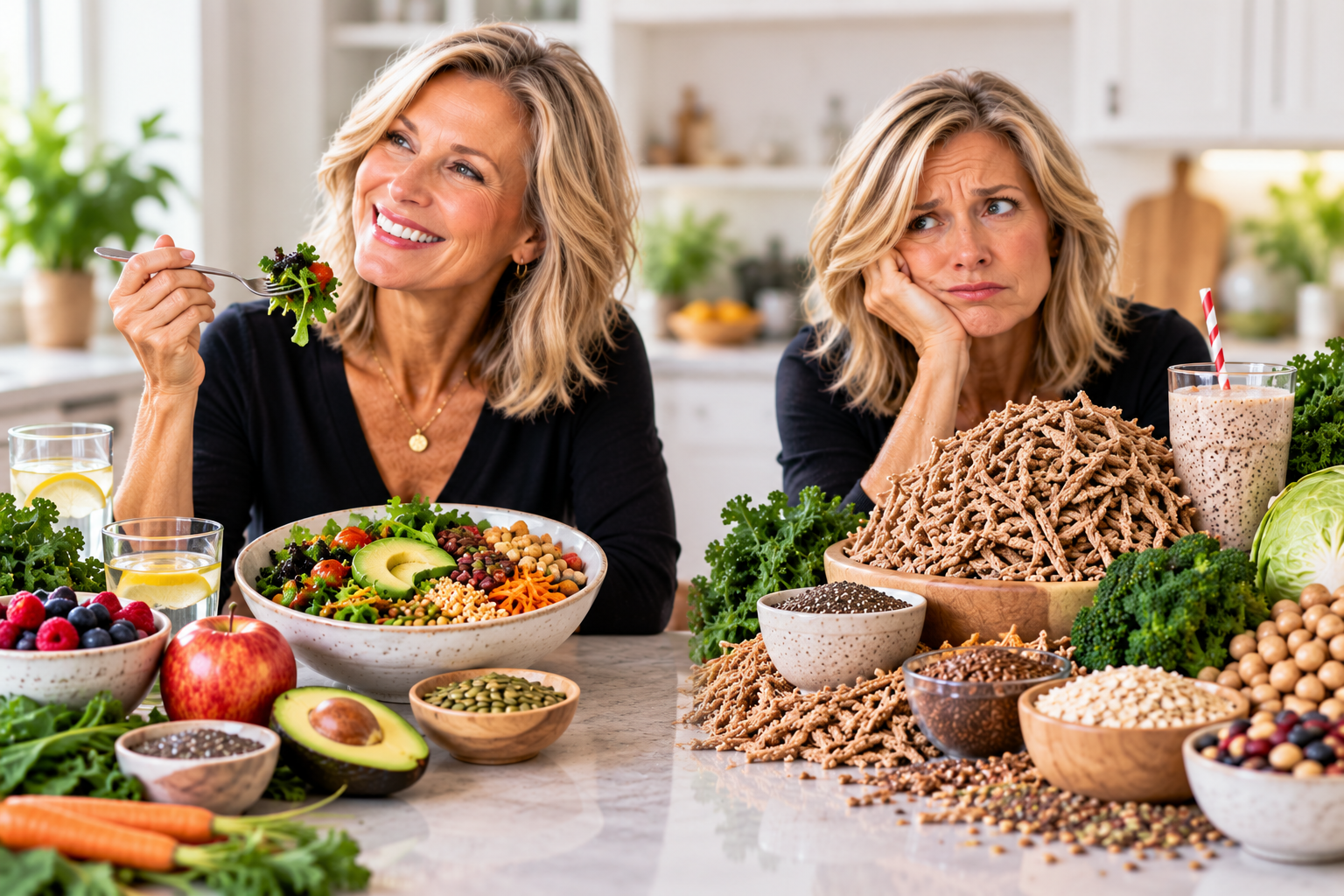
Fiber is having a big social-media moment.
Apparently, we are now supposed to “fibermaxx,” which sounds less like lunch and more like a personal-finance strategy.
Suddenly everyone is adding fiber powder to coffee, drinking chia seed water, and acting as though a trip to the bathroom deserves a TED Talk.
Here is the No BS version: fiber matters. Especially after 50. But you do not need to turn your kitchen into a supplement aisle or go from barely eating vegetables to consuming an industrial amount of bran by Tuesday.
You need more plants, a little patience, and enough water for the plan to work.
Why fiber matters after 50
Fiber helps keep digestion moving and can help prevent constipation. It also helps meals feel more satisfying, which is useful if you are tired of being hungry an hour after eating a “healthy” lunch that was mostly lettuce and optimism.
Women over 50 are commonly encouraged to aim for roughly 21 to 22 grams of fiber per day, although your individual needs can vary. More important than hitting a perfect number is regularly including fiber-rich foods you actually enjoy and tolerate.
Fiber is not glamorous. Neither is brushing your teeth. Both are still good ideas.
The mistake: going from zero to “fibermaxxing”
If your usual diet is low in fiber, dramatically increasing it overnight can lead to gas, bloating, cramping, and the uncomfortable realization that your gut has filed a formal complaint.
The sensible approach is to increase fiber gradually and drink enough fluids. That gives your digestive system time to adjust. It also makes it more likely you will keep the habit instead of deciding fiber is a scam by Thursday.
And no, the answer is not automatically a powder. Supplemental fiber can be appropriate for some people, but food brings other nutrients, flavor, and the basic pleasure of eating something that looks like food.
What to eat instead of buying another powder
Start by adding one or two of these to your regular routine:
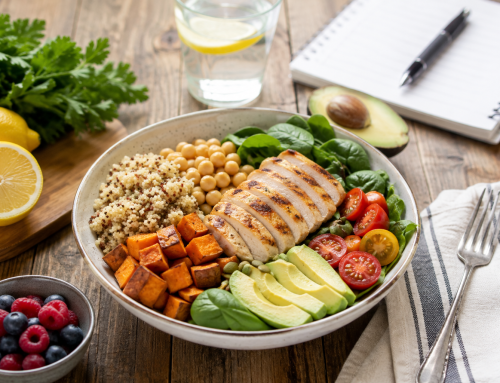
· Berries, apples, pears, oranges, or other fruit you will actually eat.
· Vegetables at lunch and dinner—not because you are being “good,” but because your body benefits from them.
· Oatmeal, whole-grain bread, brown rice, or other whole grains you like.
· Beans, lentils, chickpeas, or edamame. Yes, canned beans count. You are busy.
· Nuts and seeds, in portions that work for you.
· A baked potato with the skin, because food does not need to be sad to be healthy.
A realistic way to begin
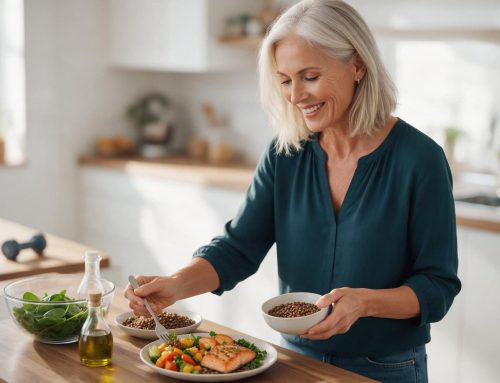
Pick one meal this week and make it a little more fiber-friendly. Add berries to yogurt. Put beans on a salad. Have an apple and peanut butter instead of grazing through a box of crackers. Eat vegetables with dinner before the takeout fries disappear.
Then repeat it. Healthy aging is not built on one ambitious grocery trip. It is built on ordinary choices you can make again next week.
If you have ongoing constipation, significant abdominal pain, unexpected weight loss, rectal bleeding, vomiting, trouble passing gas, or a new change in bowel habits, do not try to solve it with chia seeds and positive thinking. Contact your health-care professional. And if you have a digestive condition, kidney disease, fluid restrictions, or other medical concerns, get individualized advice before making major changes.
The No-BS takeaway
Fiber is worth paying attention to after 50. It supports digestion and can help meals keep you fuller longer.
But you do not need to “maxx” anything.
Eat more plant foods. Increase slowly. Drink enough water. Give it time.
That is not trendy. It is better: it is doable.
Lorie Eber, The No-BS Nutritionist, is a Certified Wellness Coach and Nutritionist who helps women over 50 cut through the confusion around nutrition, menopause, sleep, stress, and healthy aging so they can feel stronger, healthier, and more confident.