
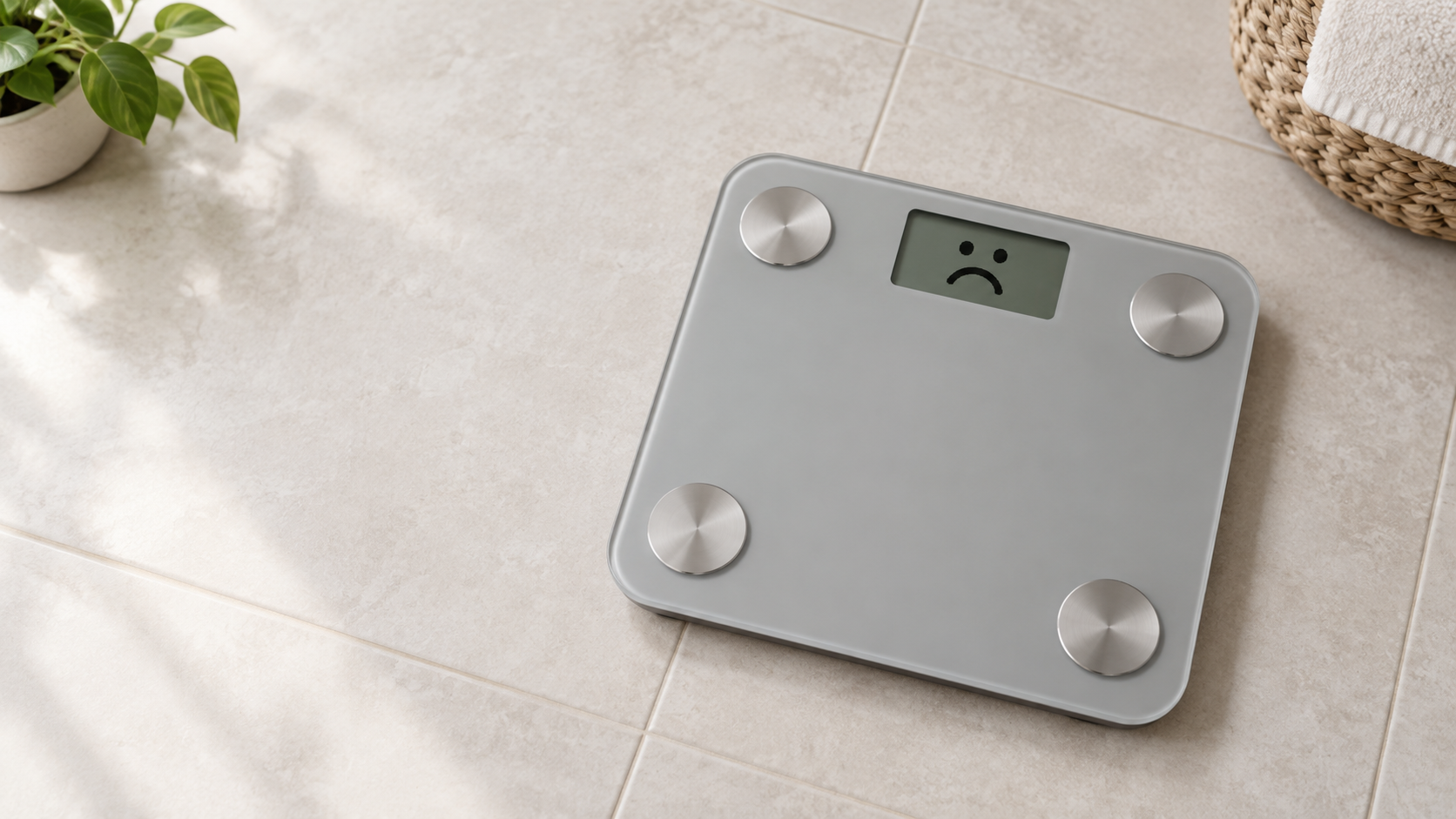
You’re eating better. You have more energy. Your pants aren’t digging into your waist. Then you step on the scale, see the same number, and decide none of it counts. Since when does a bathroom scale get to overrule everything else?
If your goal is weight loss, of course you want that number to drop. But before you decide your efforts aren’t working, look at what else has changed. That doesn’t mean making excuses for a plateau. It means knowing the difference between no weight loss and no progress.
The scale doesn’t measure everything
Your bathroom scale can tell you how much you weigh. It cannot tell you whether you’re stronger, whether climbing stairs has gotten easier, or whether your blood pressure has improved. Those aren’t consolation prizes. Regular physical activity can improve sleep, lower blood pressure, and help maintain muscle and strength—even when your weight isn’t doing what you want. If your goal is weight loss, the number still matters. It just doesn’t deserve to be the only number in the conversation.
Do you actually feel better?
Do you have more energy? Less brain fog? Are you getting through the afternoon without feeling like you need a nap under your desk? I like to say you can’t fool the body. When you eat crap, you’re going to feel crappy. If eating better leaves you feeling more alert and less sluggish, pay attention. That matters, even if the scale hasn’t budged.
And what about your blood tests? If your blood sugar or cholesterol numbers have improved, don’t brush that off because you’re still wearing the same size pants. You’re not just trying to weigh less. You’re trying to feel better and be healthier. Don’t overlook those results while waiting for a different number on the scale.
Are your clothes fitting differently?
If you’re strength training, you may be changing your body composition—the proportion of fat and lean tissue—without seeing much movement on the scale. Losing some fat while gaining muscle can make the weight change less obvious. Perhaps your waistband feels looser. Perhaps the same pants fit more comfortably.
That’s worth noticing. It doesn’t tell you exactly how much fat you’ve lost, but it’s another piece of information. Just don’t automatically declare that every stalled pound has turned into muscle. Starting a few workouts doesn’t establish that.
Are everyday things getting easier?
Can you carry groceries more easily? Get out of a chair without pushing off with both hands? Lift a heavier weight with good form? That’s measurable progress. Strength training supports the muscle and physical ability you need for everyday activities. Looking smaller is one possible goal. Being more capable deserves a place on the list, too.
Sometimes you do need an adjustment
Now for the part nobody particularly wants to hear. If your weight trend and waist measurement haven’t changed for several weeks, and fat loss remains your goal, review the plan. Plateaus are common. As you lose weight, your energy needs can decrease. What worked initially may eventually need adjusting. That doesn’t mean your metabolism is broken.
Look honestly at portions, drinks, snacks, and activity. Not to put yourself on trial. To see what’s actually happening. The answer isn’t automatically to eat as little as possible or punish yourself with more exercise. It’s to identify a sensible adjustment you can maintain.
The No-BS takeaway
Give yourself a small scoreboard, not a daily verdict. Watch your weight trend. Periodically check your waist measurement. Notice your energy, strength, and how comfortably you move. Keep your blood pressure and blood test results in the picture.
If other things are improving, acknowledge them. If fat loss has genuinely stalled, address it. You can do both. The scale is one measurement. It is not the whole progress report.
Lorie Eber, The No-BS Nutritionist, is a Certified Wellness Coach and Nutritionist who helps women over 50 cut through the confusion around nutrition, menopause, sleep, stress, and healthy aging so they can feel stronger, healthier, and more confident.