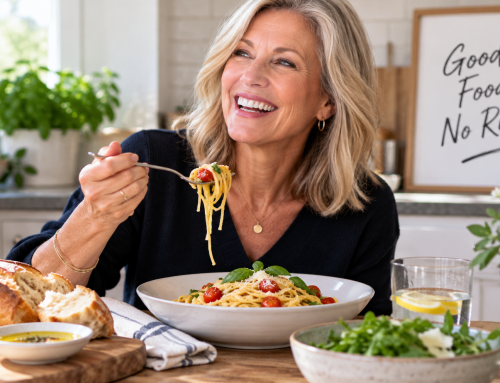
Remember when you could skip breakfast, grab a sandwich for lunch, eat whatever sounded good for dinner—and your weight barely moved? Then you hit your 50s.
Suddenly, the same eating habits don’t seem to produce the same results. You may notice more weight around your middle, less muscle definition, more cravings, or a number on the scale that seems determined to creep upward.
It’s tempting to blame your metabolism and assume the solution is simply to eat less.
But nutrition for women over 50 isn’t just about eating fewer calories. Your body has changed, and your nutrition needs to change with it.
You Need More Protein—Not Less Food
One of the biggest nutritional mistakes I see women make as they get older is eating too little protein. We naturally lose muscle as we age, and the process accelerates if we aren’t doing anything to preserve it. Hormonal changes associated with menopause can make maintaining muscle and body composition even more challenging.
That matters for much more than how your arms look in a sleeveless shirt. Muscle helps you stay strong and independent. It supports balance, bone health, blood sugar regulation, and metabolic health.
Maintaining muscle requires protein, which is why adequate protein should be a priority when we talk about healthy nutrition after 50. Instead of eating very little all day and then having a large serving of protein at dinner, try including protein at every meal.
Eggs, Greek yogurt, cottage cheese, fish, chicken, tofu, beans, lentils, and other protein-rich foods can all help. And yes, strength training matters too. Protein provides the building materials; resistance exercise gives your body a reason to use them.
Fiber Becomes Even More Important
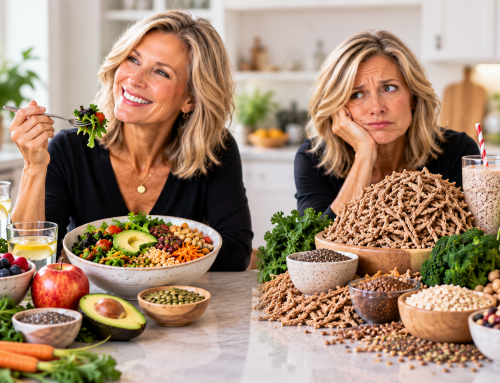
Protein gets most of the attention these days, but don’t forget about fiber. Fiber helps with fullness, digestion, blood sugar control, cholesterol, and gut health. Yet many adults don’t get nearly enough.
Fortunately, you don’t need a trendy fiber supplement to fix that. Vegetables, fruit, beans, lentils, whole grains, nuts, and seeds can all help increase your intake.
One simple strategy is to look at your plate and ask:
Where’s the fiber?
If the answer is nowhere, add some.
Stop Trying to Survive on 1,200 Calories
For decades, women have been told that weight loss means eating less. So when the scale starts creeping up after 50, the natural reaction is often to cut calories even further.
That can backfire. Chronically under-eating can make it harder to get enough protein, fiber, vitamins, minerals, and other nutrients your body needs. It can also leave you tired, hungry, and much more likely to abandon the whole plan by 8 p.m.
You don’t get bonus points for eating as little as possible.
The goal is to eat enough of the right foods to support your body while creating an appropriate calorie balance if weight loss after 50 is your goal. Those are two very different things.
Your Food Quality Matters
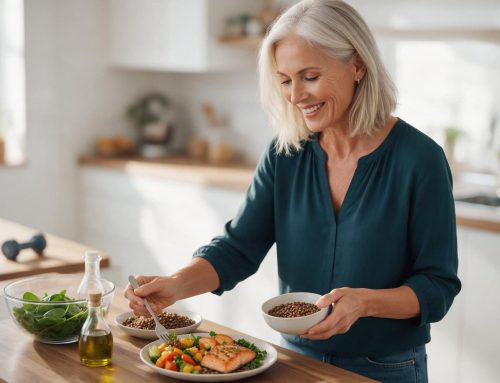
Calories still matter, but where those calories come from matters too. A 300-calorie meal containing protein, vegetables, fiber-rich carbohydrates, and healthy fats affects your hunger and nutrition very differently from 300 calories of cookies or chips.
That doesn’t mean cookies are forbidden. It means most of your diet should come from foods that actually give your body something useful.
After 50, there’s less room for what I call “nutritional freeloaders”—foods that take up a lot of your calorie budget without providing much nutrition or keeping you satisfied.
Focusing on nutrient-dense, minimally processed foods is one of the simplest ways to improve nutrition for women over 50 without following another complicated diet.
You Don’t Need a Special Menopause Diet
Despite what social media may tell you, there isn’t one magical menopause diet. You don’t automatically need to eliminate carbohydrates, dairy, gluten, fruit, or everything else somebody on TikTok has declared inflammatory this week.
And you certainly don’t need a detox.
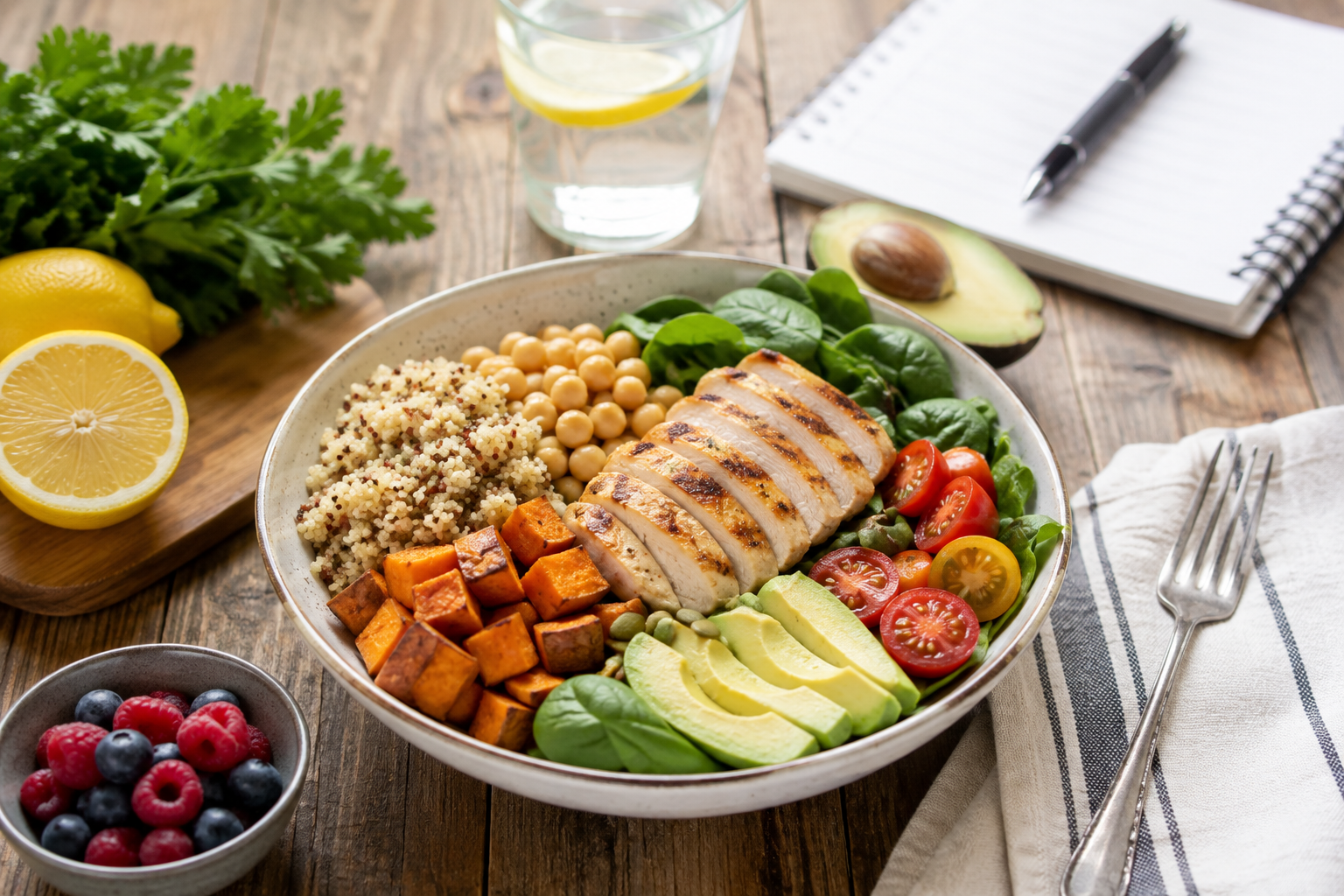
What works is considerably less exciting: adequate protein, plenty of plants and fiber, mostly minimally processed foods, healthy fats, reasonable portions, regular strength training, movement, sleep, and consistency.
Not very sexy. But effective.
Eat for the Body You Have Now
One of the hardest parts of getting older is accepting that some of the strategies that worked when you were younger may not work as well anymore. That doesn’t mean you need to declare war on your body or jump on the latest diet trend.
It means you’re asking a 55- or 65-year-old body to operate on a nutrition plan designed for a 35-year-old body. Instead of eating less and exercising more, start asking a better question:
What does my body need now?
For most women over 50, the answer isn’t another restrictive diet. It’s better nutrition, enough protein, more muscle, more fiber, adequate recovery—and an eating strategy designed for this stage of life.
Nutrition for women over 50 should be about supporting the body you have now—not trying to eat the way you did decades ago.
Work With Lorie
I help women over 50 across Irvine, Tustin, Newport Beach, Costa Mesa, and greater Orange County eat for the body they have now—stronger, more energetic, and more confident, without another restrictive diet.