The Midlife Muscle Mistake Many Women Make
By Lorie Eber — Healthy Aging Coach, Orange County
For decades, women were given a pretty simple formula for staying fit: eat less and do more cardio.
Walk. Run. Take an aerobics class. Get on the elliptical. Burn calories.
And cardio is absolutely good for you. It strengthens your heart, improves endurance, and can help reduce the risk of chronic disease.
But once you hit midlife, cardio alone isn’t enough.
If you’re walking several miles a day but rarely picking up a weight, you may be overlooking one of the most important tools for healthy aging: strength training.
Muscle Becomes More Important in Midlife
Starting around age 30, we gradually begin losing muscle mass. The process tends to accelerate as we get older, particularly during and after menopause.
That’s a bigger deal than whether your arms look toned.
Muscle helps you get out of a chair, carry groceries, climb stairs, maintain your balance, and stay independent as you age. It also plays an important role in metabolic health.
Muscle is one of the primary places your body uses and stores glucose. Maintaining more muscle can help your body manage blood sugar more effectively and improve insulin sensitivity.
In other words, strength training isn’t just about getting stronger.
It’s metabolic medicine.
Cardio Burns Calories. Muscle Changes the Equation.
Many women gravitate toward cardio because it feels productive.
You walk for 45 minutes and your watch tells you how many calories you burned. There’s an immediate payoff.
Strength training works differently.
Instead of focusing primarily on how many calories you burn during the workout, you’re giving your body a reason to maintain—and ideally build—muscle tissue.
That’s especially important if you’re trying to lose weight in midlife.
When people lose weight through calorie restriction without strength training, they don’t necessarily lose only body fat. They can lose muscle, too.
The number on the scale may go down, but losing muscle is exactly what we don’t want as we age.
The goal shouldn’t simply be to weigh less.
It should be to maintain as much strong, functional muscle as possible.
No, You Won’t Suddenly Get Bulky
This fear still stops a surprising number of women from lifting weights.
Let me reassure you: accidentally developing huge muscles is not a realistic problem.
Building significant muscle takes considerable time, progressive training, adequate nutrition, and a whole lot of effort.
For most midlife women, strength training creates exactly what they’re looking for: a stronger, firmer body that’s better equipped to handle everyday life.
And you don’t need to become a gym rat.
You Don’t Have to Give Up Cardio
This isn’t an either/or proposition.
Keep walking. Keep hiking. Ride your bike. Swim. Dance. Do whatever cardiovascular exercise you enjoy.
Just don’t let cardio be your only form of exercise.
Ideally, adults should include muscle-strengthening activity at least two days a week, working the major muscle groups.
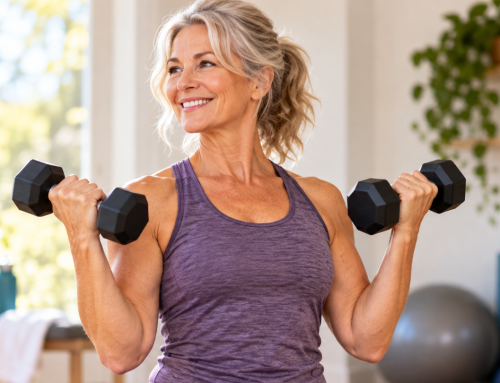
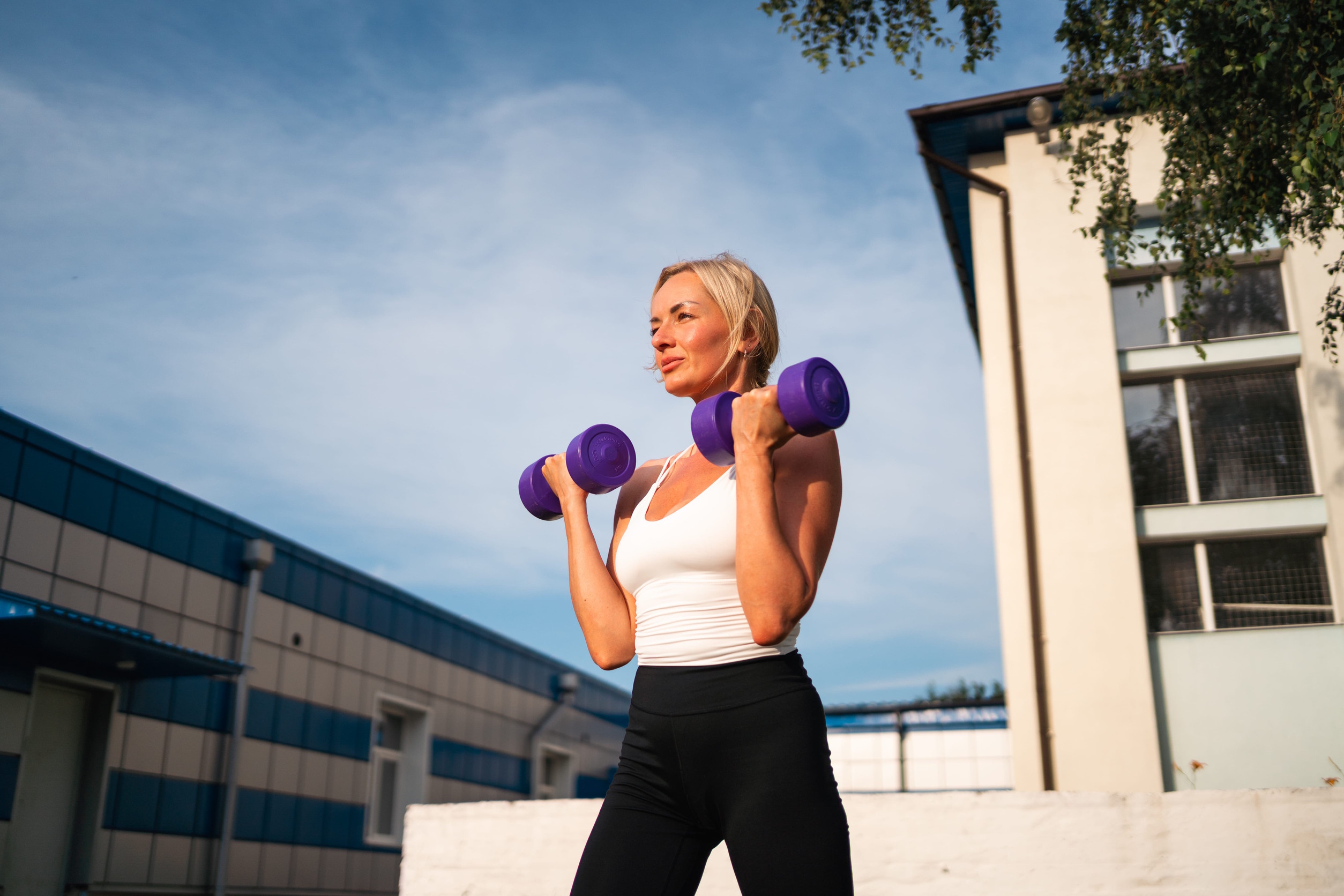
That could mean dumbbells, resistance bands, weight machines, or bodyweight exercises. The best approach is one you can perform safely, progressively, and consistently.
The key word is progressively.
If you lift the same five-pound dumbbells for years and the exercises never become challenging, your muscles have little reason to adapt. As you get stronger, you gradually need to increase the challenge.
Think Beyond the Scale
One of the biggest shifts I encourage women to make in midlife is to stop viewing exercise solely as a way to burn calories.
Movement does much more than that.
Cardio supports your heart and lungs.
Strength training supports your muscles, bones, blood sugar regulation, balance, mobility, and ability to remain independent.
You need both.
So if your exercise routine consists of walking, walking, and more walking, keep the walking.
But pick up some weights, too.
Your 70-, 80-, and 90-year-old self may be very glad you did.
Work With Lorie
I help women over 50 across Irvine, Tustin, Newport Beach, Costa Mesa, and greater Orange County build strength and stay independent through realistic, sustainable habits.
Not sure where to start with strength training? Book a Discovery Call and let’s map it out together.
Lorie Eber is a former corporate attorney turned Healthy Aging Coach based in Orange County, California. She helps women over 50 stay strong, energetic, and independent through sustainable nutrition and lifestyle habits.