
Many women in midlife say the same thing:
“I eat small portions. I watch my calories. I try to make good choices. But I’m hungry again an hour later.”
They’re not careless.
They’re not overeating.
They’re frustrated because what they were told should work… isn’t working.
What’s usually missing isn’t discipline.
It’s satiety, the feeling of lasting fullness.
And satiety has very little to do with calories alone.
Why Calories Don’t Tell the Full Story
For years, we’ve been taught that weight management is about “calories in, calories out.”
But your body doesn’t experience food as math.
It experiences food as signals.
Those signals affect:
• Hunger hormones
• Blood sugar stability
• Energy levels
• Cravings
• Stress response
Two meals with the same calories can produce completely different results. One keeps you full for hours. The other leaves you searching for snacks.
This is especially common during perimenopause, menopause, high stress, or poor sleep.
From a metabolic health perspective, the goal isn’t eating less.
It’s eating in a way that keeps your system steady.
The Two Nutrients That Matter Most: Protein and Fiber
When it comes to staying full, two nutrients consistently do the most work: protein and fiber.
Protein
Protein sends strong fullness signals to the brain. It slows digestion, stabilizes blood sugar, reduces cravings, and protects muscle mass, which is essential for metabolism after 40.
When people diet, protein often drops first. This is why hunger increases when restriction starts.
Fiber
Fiber adds volume without spiking blood sugar. It slows digestion and helps the body recognize satisfaction. Fiber-rich foods also take longer to chew and digest, supporting appetite control.
Together, protein and fiber create fullness that lasts.
Why Snacks Often Don’t Fix Hunger
When meals are low in protein and fiber, hunger returns quickly.
This leads to constant grazing, even when calories seem “under control.”
Snacks aren’t the problem.
Incomplete meals are.
Instead of asking why you’re hungry again, it’s often better to ask whether your last meal gave your body enough structure to feel satisfied.
Why This Matters for Metabolic Health
Meals lacking protein and fiber often cause blood sugar spikes followed by crashes.
These crashes show up as:
• Sudden hunger
• Fatigue
• Irritability
• Sugar cravings
Over time, this pattern makes metabolism feel “broken.”
In reality, the body is responding to inconsistent signals.
A metabolic reset isn’t about restriction.
It’s about restoring stability.
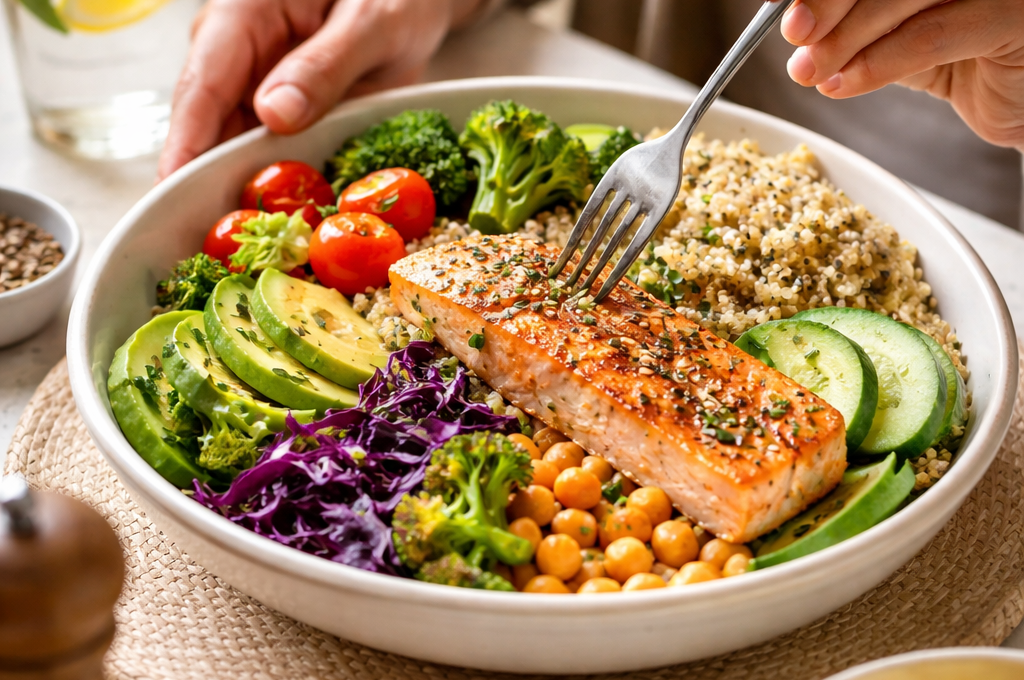
What This Looks Like on a Plate
Meals that support fullness usually include:
• A clear protein source
• Fiber-rich vegetables or whole grains
• Healthy fats
• Whole, minimally processed foods
These are balanced meals, not “naked” carbs eaten alone.
They don’t have to be large or complicated.
They just need to be complete.
The Takeaway
Feeling hungry isn’t a failure of willpower.
It’s a biological response to how you eat.
Protein and fiber matter because they help the body feel nourished, regulated, and safe.
If you’re constantly hungry, tired, or fighting cravings, it’s rarely because you’re eating too much.
More often, it’s because you’re not eating in a way that supports metabolic health.
Sometimes the most powerful change isn’t cutting calories.
It’s choosing foods that let your body finally exhale.