If you’re in your 40s or 50s and wondering why weight loss suddenly feels harder, you’re not alone.
One of the most common frustrations women share in perimenopause and menopause sounds like this:
“I’m eating less, exercising more, and the scale still won’t move.”
And eventually, that frustration becomes personal. Women start blaming their discipline, willpower, or motivation.
But in most cases, menopause weight gain is not a character flaw.
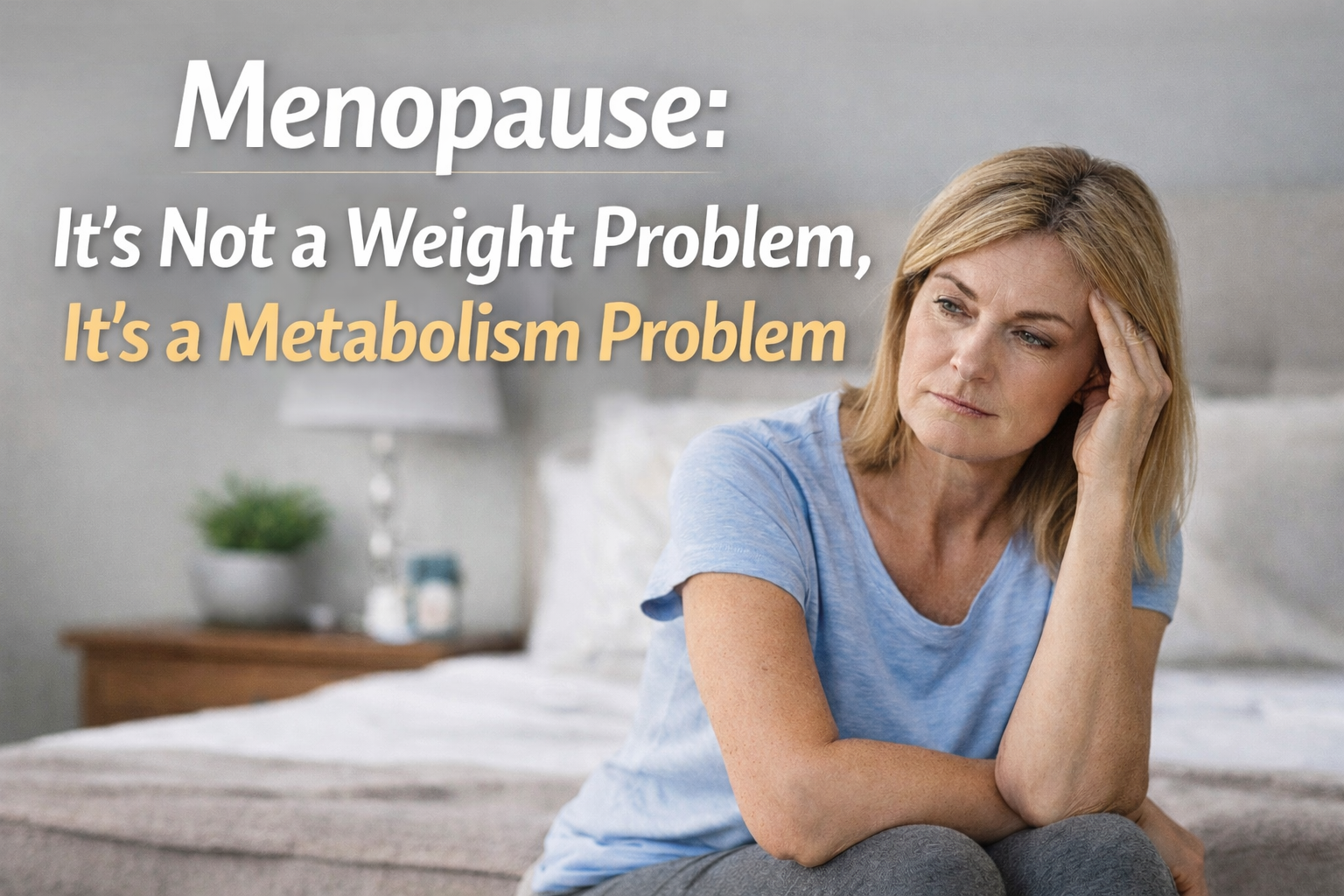
Menopause isn’t a weight problem, it’s a metabolism problem.
And treating it like a weight problem is one of the biggest reasons women feel stuck.
Why Weight Loss After 40 Feels Different
For decades, traditional weight loss advice has been simple:
Eat less. Move more. Try harder.
That approach might work temporarily when your hormones, muscle mass, sleep quality, and recovery are relatively stable.
But during perimenopause and menopause, the metabolic environment changes.
As estrogen begins to fluctuate and decline, many women notice that:
-
eating less leads to fatigue instead of fat loss
-
more cardio leads to burnout instead of results
-
cravings increase even when “eating clean”
-
sleep becomes lighter or more disrupted
-
belly fat becomes more noticeable
-
the same habits that worked in their 20s or 30s stop working
This is not you “getting lazy.”
This is biology.
The Link Between Estrogen and Metabolism
Estrogen plays a significant role in metabolic function. It influences:
-
insulin sensitivity (how well your body uses carbohydrates for energy)
-
muscle maintenance (key for metabolic rate and blood sugar balance)
-
fat storage patterns (especially around the abdomen)
-
stress resilience and sleep stability
As estrogen declines, the body often becomes:
-
less efficient at using glucose
-
more prone to blood sugar swings
-
more sensitive to stress and poor sleep
-
more likely to store fat centrally (around the belly)
That’s why menopause weight gain and stubborn belly fat are so common, even when women are “doing everything right.”
Why Traditional Dieting Stops Working in Menopause
Many women respond to weight gain in menopause by tightening control:
-
cutting calories further
-
increasing workouts
-
eliminating more foods
-
pushing harder
But this often creates the exact opposite result.
Because the body doesn’t interpret chronic restriction and over-training as “fat loss.”
It interprets it as stress.
And stress changes metabolic signals.
Why Eating Less Can Make Menopause Weight Gain Worse
When women chronically under-eat (especially in midlife), the body becomes more protective.
Over time, under-fueling can contribute to:
-
decreased energy expenditure
-
increased cravings and appetite dysregulation
-
poor sleep quality
-
muscle loss (which lowers metabolic rate)
-
blood sugar instability
-
stronger cortisol-driven fat storage
So instead of fat loss mode, many women shift into conservation mode.
This is why a lot of menopause weight loss efforts feel like:
“I’m doing more and getting less.”
Menopause Belly Fat Isn’t Random
One of the most frustrating midlife changes is abdominal fat gain.
But from a metabolic perspective, belly fat is often a signal, not a failure.
Belly fat in menopause is strongly linked to:
-
insulin resistance
-
elevated cortisol
-
reduced muscle mass
-
inconsistent fueling
-
chronic stress and sleep disruption
As estrogen declines, cortisol and insulin become more influential. If those signals are not supported properly, fat storage around the abdomen becomes more likely.
This doesn’t mean you need harsher dieting.
It means you need better metabolic signals.
Menopause Weight Gain Is Often a Metabolic Signal
If the scale isn’t moving despite effort, your body is communicating something.
Usually the signal relates to:
-
blood sugar regulation
-
insulin sensitivity
-
muscle loss and poor recovery
-
stress overload
-
inconsistent meals or under-eating
-
poor sleep and circadian disruption
The goal is not to “force weight off.”
The goal is to restore metabolic stability so the body becomes responsive again.
How to Support Metabolism in Menopause (Without Extremes)
The question to ask is not:
“How do I lose weight?”
A more helpful question is:
“What does my metabolism need right now?”
Supporting metabolic health during menopause typically includes:
1) Eat Enough Protein
Protein supports:
-
muscle maintenance
-
satiety and cravings
-
stable blood sugar
-
metabolism and recovery
This becomes more important after 40 because muscle naturally declines without support.
2) Stabilize Blood Sugar With Consistent Meals
Skipping meals or inconsistent eating can create:
-
energy crashes
-
stronger cravings
-
late-night overeating patterns
-
stress-driven hunger signals
Consistency often matters more than perfection.
3) Strength Train to Protect Muscle and Insulin Sensitivity
If you want sustainable menopause weight loss, strength training is foundational.
It supports:
-
muscle retention
-
insulin sensitivity
-
metabolic flexibility
-
confidence and mobility
4) Prioritize Sleep and Stress Regulation
Sleep and stress are not “extras.”
They are metabolic drivers.
Poor sleep increases:
-
hunger signals
-
cravings
-
insulin resistance
-
cortisol imbalance
When sleep improves, the body often becomes more stable and responsive.
5) Use Strategic Movement Instead of Excessive Cardio
Midlife bodies respond better to:
-
walking
-
strength training
-
moderate cardio
-
movement that supports recovery
Not punishment workouts.
A Metabolic Reset, Not Another Diet
A metabolic reset is not a detox. It’s not restriction. It’s not perfection.
It’s restoring the core signals that allow metabolism to function well again:
-
consistent nourishment
-
stable blood sugar
-
stronger muscle support
-
sleep and recovery
-
lower chronic stress load
For many women, this approach feels like relief, because it finally aligns with how the body works in midlife.
The Bottom Line
Menopause doesn’t mean your body is broken.
It means your metabolism has changed.
When menopause is treated like a weight problem, women often feel frustrated and exhausted.
When it’s approached as a metabolic health issue, the path forward becomes clearer and more sustainable.
Your metabolism doesn’t need more restriction.
It needs better signals.
And menopause isn’t the end of progress, it’s an opportunity to support your health in a smarter way.